WHERE DO YOU WORK BEST?
If you stop and think about the last time you had a really good, productive day, chances are it wasn’t under a flickering strip light next to the noisiest corner of the office. Where we work has a surprisingly big effect on how we work, whether that’s a room so loud you can’t hear yourself think, a space so quiet it drains the energy out of everyone, or a building where you can never find a free meeting room when you need one.
That’s really the starting point for understanding flexible workspace productivity, because when your team has somewhere that suits the way they work, it’s a lot easier for them to do their best work in it.
A space built around your people
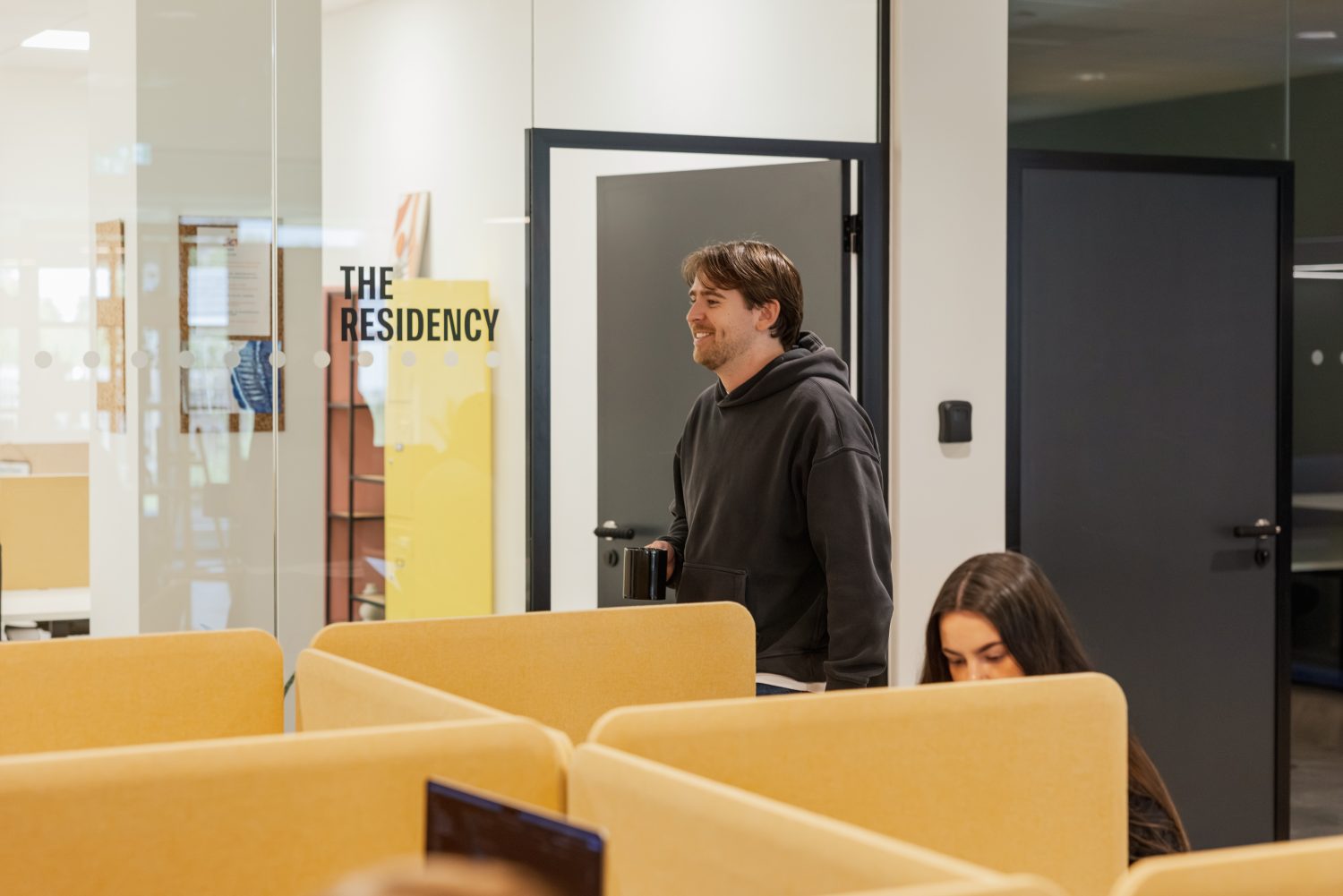
A good flexible office gives your team options, which might mean somewhere quiet to focus, somewhere more sociable to bounce ideas around, and a proper meeting room when you need one without the usual scramble. Not every task needs the same kind of space, so it makes sense that your office shouldn’t pretend otherwise, and this variety is at the heart of flexible workspace productivity.
It’s worth asking what your team needs most right now. Is it peace and quiet to get their heads down, or a place to get together and talk things through? The answer is often both, at different points in the week, which is exactly what flexible space is designed to offer.
more time for the work itself
When somebody else takes care of the Wi-Fi, the maintenance and the facilities, your team doesn’t lose time to any of it. That might sound small, but over a whole year those little interruptions add up, and fewer of them tends to mean more focus and better work. It’s one of the quieter reasons behind flexible workspace productivity, and one that’s easy to overlook until you experience it for yourself.
It’s easier to get stuck in together
Ideas usually travel faster when people can actually get together, and a flexible office makes that easier, with space to collaborate when you want to and space to step away when you don’t. That balance plays its own part in flexible workspace productivity, because collaboration and focus both matter, just at different moments.
Why the 67% makes sense
When your people can focus and enjoy where they’re working, ideas come a bit more easily and work tends to get done. That’s most likely what sits behind the 67% of flexible office users who report higher productivity, according to IWG. Your team tends to feel the benefits of flexible workspace productivity first, and your business often feels it soon after.
FAQs
Does flexible workspace improve productivity?
67% of flexible office users report higher productivity, according to IWG. It’s what people tell us themselves, and it shows how much the right space can matter.
Why would a flexible office be more productive?
The space is designed around how you work, with room to focus and room to collaborate, and much of the day-to-day admin is looked after for you, which all feeds into flexible workspace productivity.
Can a flexible office work for hybrid teams?
Yes, it can. Flexible space is built around how your team actually uses it, so it suits days in the office, days at home and everything in between.
